
Tahawwur Hussain Rana, a Pakistan-born Canadian national and close associate of David Coleman Headley, could be extradited to India in connection with the 26/11 Mumbai terror attacks. Rana's travel history in parts of north and south India before the attacks in 2008 is expected to provide crucial leads for the investigation. His extradition would mark the third person to be tried in India for the attacks, after Ajmal Kasab and Zabiuddin Ansari alias Abu Jundal.
'We do not want to fall into a trap of uncontrolled escalation or all out conflict.' 'When the need arises we will do that.'
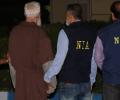
Tahawwur Hussain Rana, a Canadian national accused of involvement in the 2008 Mumbai terror attacks, has been extradited to India from the United States. Rana's interrogation is expected to shed light on the role of Pakistani state actors in the attacks, which claimed 166 lives. Indian authorities are particularly interested in his travels across India in the days leading up to the attacks, including visits to Hapur, Agra, Delhi, Kochi, Ahmedabad, and Mumbai. Rana's extradition follows a lengthy legal battle, with the US Supreme Court ultimately denying his application to challenge it. Rana is known to be associated with Pakistani-American terrorist David Coleman Headley, one of the main conspirators of the 26/11 attacks. The investigation into the Mumbai attacks has implicated senior members of terror outfits Lashkar-e-Taiba (LeT) and Harkat-ul Jihadi Islami (HuJI), as well as officials from Pakistan's Inter-Services Intelligence (ISI).
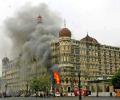
Tahawwur Rana, accused of involvement in the 2008 Mumbai terror attacks, is expected to be extradited to India from the United States soon. The US Supreme Court denied his last-ditch effort to stop his extradition, moving him closer to being handed over to Indian authorities. Rana's extradition is expected to help probe agencies expose the role of Pakistani state actors behind the attacks and shed new light on the investigation. He is associated with Pakistani-American terrorist David Coleman Headley, one of the main conspirators of the 26/11 attacks.
Tahawwur Hussain Rana, a Pakistan-born Canadian national and close associate of David Coleman Headley, is set to be extradited to India from the US. Rana was involved in the planning and execution of the 2008 Mumbai terror attacks, which killed 166 people, including six Americans. He assisted Headley in obtaining a visa for India, established a front company in Mumbai, and helped in reconnaissance of targets in Mumbai and New Delhi. Rana was convicted in the US for providing material support to Lashkar-e-Taiba (LeT) and sentenced to 14 years in prison. His extradition to India will allow authorities to question him about his involvement in the Mumbai attacks and potentially uncover new information about the role of Pakistani state actors.

The community is planning to welcome Modi at every possible location where he could be available during his three-day stay.

'In a complex conflict like Kashmir, you can't just ignore the militants when you talk of a permanent solution.'

'I'm a big fan of Hindu and a big fan of India -- big, big fan.'

'They are both very individualistic and have similar personalities.'

The attack on Rushdie sent shock waves around the world, with world leaders and literary stalwarts saying they were appalled at the attack on the author who championed free speech and lived under the threat of assassination for nearly half his life.

We must heed what the CJI has said. Challenging every judgment of the central government is inviting chaos, asserts Shreekant Sambrani.

The best, wisest, and fairest next step in strengthening our own cause is to restore statehood to Jammu & Kashmir and allow the resumption of robust political activity. That's a box that remains unchecked on the Modi government's report card as we approach the fourth anniversary of Kashmir's Constitutional shift, notes Shekhar Gupta.

But why should India be talking to the Taliban in the first place? There is no love lost there. India will never forget or forgive the humiliation to which the Taliban subjected it in the IC-814 hijack, notes Shekhar Gupta.

From Bollywood-themed performances to a heritage tour... Donald Trump will soak up all things Indian.

'Pakistan has a big role to play in fomenting trouble, but we need to ask ourselves why ordinary Kashmiris are coming out in large numbers to attend the funerals of terrorists.'

This is the first time a Presidential candidate is addressing the Hindu community, that too days before the election.

The United States has said it will continue to press Pakistan to take "additional steps" to deal with terror groups seeking refuge within its borders, hours after Prime Minister Nawaz Sharif sought American help to resolve bilateral issues between India and Pakistan.

Girls in the Kashmir valley hurling defiance at the security forces will detract from the legitimacy of India's response and its standing in the world, says Ajai Shukla.
'The BJP's all-India plans can be expected to become clearer around 2022-2023, particularly if -- as some anticipate -- the senior Congress leadership cracks, broadly as between the Nehru-Gandhi loyalists and those who may be termed 'pro-changers',' observes Arun Bhatnagar, a retired IAS officer.

'The response to savagery and mass injustice is never a persistent howl.' 'There will be, among the victims, those who choose to forget the scars, those who go on living, those who challenge the overall environment of sentimentality.' 'And the more effort you put into including these other voices, into assimilating these spoilsports, the more balanced your depiction of the tragedy in question will be,' observes Sreehari Nair.
For far too long, people in J&K have felt the government doesn't exist for them.' 'My first priority is to make them feel that not only does it exist, it is there to work for them.

Welcome the monsoon with these special rainy treats.
A left-leaning centralised socialist model has created a shortage/entitlement economy. In fact one of the reasons for India's limited progress is that post-independent India is at odds with its true nature. It is something that educated right of centre Hindus are trying to correct, says Sanjeev Nayyar.

'Even as discord over US-India trade and commerce colours diplomatic relations, defence relations between the two countries remain on a firm footing,' points out Ajai Shukla.

A risk-taker, she'll always be remembered for her unforgettable style and daring fashion choices as a First Lady.

'This is the first time that the Americans have agreed to refer to "cross-border terrorist attacks" in a joint statement.' 'No wonder Pakistan has called the joint statement "singularly unhelpful" and has blasted it, and its all-weather friend China has applauded Pakistan's frontline role in combating terrorism,' points out former foreign secretary Ambassador Kanwal Sibal.

'Unlike the Chinese army that has been largely a peace time force, the Indian Army is a battle hardened force,' explains Colonel Anil A Athale (retd).

Former Home Minister P Chidambaram said the government of India would not file formal charges against Pakistani-American terrorist David Headley until Ajmal Kasab's trial was over. Vicky Nanjappa reports
akistani-American David Coleman Headley outline how the Lashkar-e-Tayiba and the Inter-Services Intelligence wanted to spread terror in India.
'Washington's silence about India's Article 370 move tells us all we need to know: It doesn't want to rock the boat of a relationship that has navigated some choppy waters but remains a highly important one.'

The RSS realises that with a majority BJP government at the Centre and in several states, now was the best time to undermine and perhaps outdo the Congress-Left 'stranglehold' over campuses and young minds.
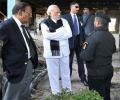
'Imran Khan would only have spoken with the full awareness of Modi's complex political personality.' 'He has the great advantage of being privy to the confidential exchanges between then Pakistan prime minister Nawaz Sharif and Modi during the latter's celebrated surprise visit to Lahore in December 2015 as well as the 'back channel' conversations between the national security advisors of the two countries,' says Ambassador M K Bhadrakumar.

Jammu and Kashmir Chief Minister Omar Abdullah on Wednesday warned that any move to abrogate Article 370, which defines relationship between the state and the Centre, will reopen the issue of the state's accession to India.
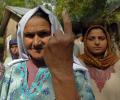
'This uniqueness of Jammu and Kashmir has to be respected by New Delhi. If it is not done, then it puts question-mark on the very basis of the relationship,' Jammu and Kashmir People's Conference chairman Sajjad Gani Lone tells Pervez Majeed.
The West has always preferred a timid, half intelligent and a dependent India rather than a decisively independent and self-reliant one. A pliable Indian leadership suits the West best, says Tarun Vijay.

Sukanya Verma recaps all the action at this year's MAMI.

How will the return of a majority government at the Centre, the new India-US friendship and the Mangalyaan triumph change India?
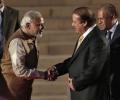
'India had nothing to gain by the talks except for some brownie points from the US for being reasonable. Pakistan desperately needed the talks to get arms and money from the Americans,' says T P Sreenivasan.
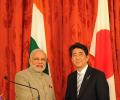
'Secretiveness and the element of surprise in announcing decisions marks the Modi style of diplomacy. From being a voluble politician, he became a reticent statesman... But the diplomatic dance is performed on thin ice and his adroitness is still to be proved,' says Ambassador T P Sreenivasan.
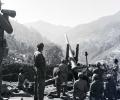
Fifty years ago, India and Pakistan fought a short but bloody war. The author finds out how Sainik Samachar, the defence ministry's journal, reported it.
